Showing posts with label invest. Show all posts

02 March 2018

INVEST - The Unique Spotify Direct IPO on the NYSE

Spotify IPO Tests the Market Value of a Platform Based Streaming Service 


Spotify LogoSwedish based streaming service, Spotify is organizing a direct listing on the New York Stock Exchange according to a recent F1 prospectus

The company lost $1.5 billion in 2017 but is well ahead of Apple's streaming service, with 71 million paying subscribers and more than 159 monthly listeners. Recent transactions show the company shares selling at more than US$132 per share.

A direct listing is different and somewhat unique as there is no underwriter of the listing. The Spotify shares will be listed for trade and the market value of the shares will be determined by the number of shares available for sale and the demand from prospective investors.

Spotify was founded in Stockholm, Sweden during 2006. Wikipedia provides the story of this music, video and podcast streaming service. The popularity of Spotify on Amazon's Alexa appears to be high and rising. Platform based offerings have become the most effective business models of the digital economy.

InfoStream is watching this listing with particular interest. It may help determine if the build/own model is sustainable. Partnering with an operator of an existing platform and ecosystem such as Amazon has distinct benefits because of discoverability and the appeal of being listed with a broader suite of products and services. It seems consumers desire to move away from the profusion of single use apps jamming their digital devices to support a smaller number of apps that meet their needs. 

Analysts seem to suggest the Spotify shares will have good support since there are a lot of investment dollars on the sidelines. Investors are keenly watching this development to understand the value of a platform based streaming business in the digital economy. InfoStream is watching the direct listing model to understand if it will disrupt the more common route to an IPO requiring underwriters and placement agents.

Important Links:


21 February 2018

INVEST - Alphabet (Google) Most Active Corporate Investor in 2017

Crunchbase - A Peek Inside Alphabet’s Investing Universe


This Crunchbase article provides a wonderful collection of information and graphs showing the investment activity and profile of Alphabet (Google) and other peers. The graphs provide a snapshot and summary of the following elements:

    Image result for venture capital image
  • Count of Corporate Investment Deals
  • Investment by Alphabet's Main Financial Arms
  • The Alphabet Investment Universe
  • Top Acquirers of Alphabet-Backed Startups


Some readers may not know of the relationship between Google, Google founders, SolarCity and Tesla which is also provided in the article.


30 January 2018

INVEST - Pfizer to Repatriate US$24B of Offshore Capital


The Repatriation of Offshore Capital Continues

Related image
Pfizer’s finally getting what it always wanted in U.S. tax reform.' According to Carly, analysts are watching to see what Pfizer plans to do next. 

In the fourth-quarter conference call, Pfizer CEO, Ian Read, suggested the company will repatriate US$24B but downplayed the possibility of a big M&A deal with the money Pfizer intends to bring home. 
“We had the capacity before tax reform to do M&A,” Read said, adding “in fact, we attempted to do two large ones that were thwarted by government interventions.”
Pfizer said it will invest about US$5B in capital projects in the US, contribute US$500M to its American pension plan, spend US$100M in bonuses for non-executive employees and contribute US$200M to the Pfizer Foundation. The Pfizer 4th Quarter report and earnings forecast was released earlier today. 

Pfizer, CFO Frank D’Amelio, said the repatriation will involve a US$15B tax payment to the US Treasury over the next 8 years and noted the effective tax rate on adjusted income will be about 17 percent next year, down from 20 percent this year.

Pfizer says the capital allocation decisions of 2017 enhanced shareholder value. In addition to investing in the business, they returned $12.7 billion directly to shareholders through a combination of dividends and share repurchases.  Pfizer anticipates share repurchases totaling $5.0 billion in 2018 that will be partially  offset due to dilution related to share-based employee compensation programs.

Pfizer reported ten approvals from the FDA, which is significantly more than the company has achieved in any year of the past decade. Read concluded the conference by saying:
“I believe our current management and business structure, the tireless dedication of our colleagues and the strong culture we have nurtured, position Pfizer especially well for continued success."
A number of analyst seemed to feel that capital would flow to the economy through shareholders rather than through direct acquisitions. Even so, these funds may contribute to new investment within the innovation framework of the digital economy.

26 January 2018

INVEST - Canadian Software Company Igloo Raises US$47M

Frontier Capital, a Charlotte Based Growth Equity Firm has Invested in Kitchener, Ontario Based Igloo.


According to the company release, this investment in IGLOO is Frontier Capital’s first foray into the Canadian market. The Frontier capital increases the total investment in IGLOO to US$56M. Frontier joins RBC Venture Partners and Blackberry in the Igloo investor group.

The Frontier Capital investment is intended to build Igloo’s sales and marketing operations, expand distribution channels, strengthen its global partnership with Microsoft, and further accelerate the company’s footprint in the North American market.

“Igloo’s growth over the last several years, in combination with our partnership with Frontier Capital, is a testament to our innovative approach to solving real world digital workplace challenges,” said Dan Latendre, Founder & CEO, Igloo. “We believe Frontier’s expertise in driving growth and creating enterprise value for software-as-a-service companies in the human capital management sector make it a natural fit for Igloo. We look forward to working with Frontier as we continue to disrupt the market and help businesses improve productivity and competitive advantage throughout their digital transformation journeys.”

In 2017 alone, Igloo expanded its global presence to 80 countries, surpassed one billion monthly interactions on its digital platform, achieved 79% year-over-year growth in the third quarter, and added more than 190 new customers to its growing base of enterprise accounts. Igloo clients include top brands across healthcare, hi-tech, financial services, retail, hospitality, and not-for-profit.

“As the next generation of employees redefines both the physical and digital workplace, we see a rapidly expanding market for innovative solutions that enable an organization to better engage its workforce by fostering collaboration and connecting employees with the right information at the right time,” said Andrew Lindner, Co-Founder and Managing Partner at Frontier Capital. 

About Igloo Software
Igloo was founded in 2008 and is a leading provider of digital workplace solutions, helping companies build inspiring digital destinations for a more productive and engaged workforce. Offering a suite of modern features and solutions for today’s evolving workplace, Igloo partners with customers to address challenges related to communication, collaboration, knowledge management, employee engagement, and culture.

19 January 2018

INVEST - Repatriation of Offshore Capital Begins

Related image

Citigroup Says There is a Whopping $2.5 trillion of Capital Stashed Internationally by US Companies.


Apple's announcement on Wednesday shows the move to repatriate capital has begun. Apple will pay US$38B in US taxes on the cash it brings back to the US and claims it will add $US350B to the US economy over the next five years, create 20,000 new jobs and open a new Apple Campus.


On making the announcement, Tim Cook, Apple's CEO remarked:
"Apple is a success story that could only have happened in America, and we are proud to build on our long history of support for the US economy. We believe deeply in the power of American ingenuity, and we are focusing our investments in areas where we can have a direct impact on job creation and job preparedness. We have a deep sense of responsibility to give back to our country and the people who help make our success possible."
Apple identified several investment priorities:
  • Growing Apple's US Operations and Direct Employment Over $10 billion of Apple's expanded capital expenditures will be investments in data centers across the US.
  • Investing in Apple's Domestic Suppliers and Manufacturing Partners Apple works with over 9,000 American suppliers in 50 states and each of Apple's core products relies on parts or materials provided by US-based suppliers.
  • Preparing Students for the App Economy Apple has a 40-year history in education and plans to accelerate its efforts across the US in support of coding education. Apple says there are more than 500,000 unfilled programming-related positions across the country and noted a US Bureau of Labor Statistic that predicts by 2020 there will be 1.4 million more software development jobs than applicants qualified to fill them.
Apple is just the first company to announce. In a late December article, Business Insider identified 14 companies that would benefit from President Donald Trump's new tax plan and included a slide analyzing each of the 14 companies.

The new Tax Policy provides two options for capital repatriated under this program:
  • Reinvestment into core businesses which is expected to have a direct bearing on economic expansion; or,
  • Repurchasing company shares which would be beneficial to the market since it signals that a stock is undervalued.
To give the repatriation discussion and numbers some context, InfoStream captured the market capitalization of the largest companies at the end of trading yesterday (18 January 2018).

  • US$920.38B World's largest Technology Company Apple
  • US$526.13B Largest US Conglomerate Berkshire Hathaway 
  • US$228.06B World's largest Telecom Company AT&T
  • US$220.49B World's largest Pharma Company Pfizer
  • US$145.43B World's largest Industrial Company GE

According to 24/7 Wall Street, the largest 5 US companies by market capitalization at October, 2017 were Apple, Alphabet/Google, Microsoft, Facebook and Amazon.

Two questions come to mind:
  1. Will there be an impact from taking this money out of foreign financial institutions and markets?
  2. Where can this capital be re-deployed in a market that is already awash with under employed capital?
One wonders if capital will be deployed to support innovation and earlier stage plays.

18 January 2018

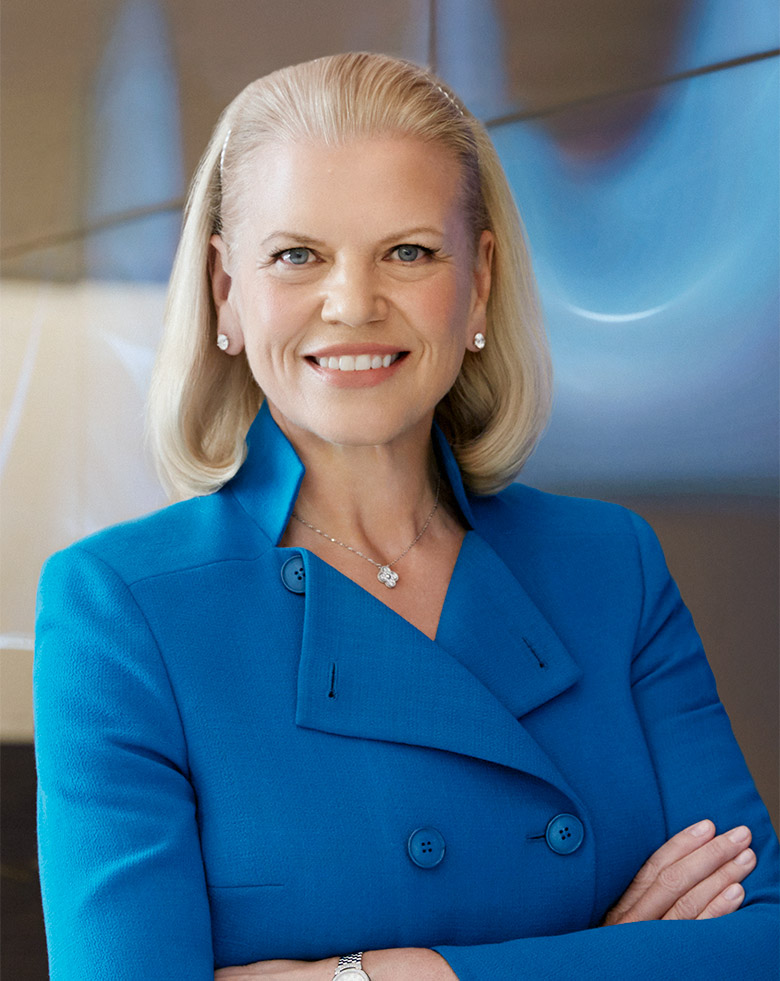
INVEST - Barclay's is Bullish on IBM's New Strategy in Cloud and Blockchain

A 'new dawn emerges' as Rometty Strategy Moves IBM

Image result for image for ginni rometty
Ginni Rometty, CEO of IBM.
Barclays raised its rating on IBM stock to overweight all the way from underweight yesterday.
"We think that IBM could emerge as the next important cloud vendor after Amazon and Azure over time as customers seek a multi-cloud strategy to avoid vendor lock-in or technology complacency," wrote Barclays analyst Mark Moskowitz. "As a result, IBM's strategic revenue should surpass legacy revenue – implying the worst may be over."
The Barclay's analyst raised his price target to $192 from $133, representing 17 percent upside from Tuesday's close.
IBM has struggled and the company's revenue had declined for 22 quarters in a row.
Developments in analytics, cloud, mobile and security technologies are all being considered as a way to offset revenue shortfalls in the company's legacy products, according to Moskowitz. Roughly 46 percent of revenue in the third quarter came from these new strategic imperatives, while cloud revenue for the quarter was $4.1 billion, up 20 percent from the previous year.
One of the technologies highlighted by Moskowitz, blockchain may also be an area in which IBM could capitalize. It currently has 1,500 employees assigned to developing blockchain, hoping to leverage the popular technology with Walmart to address food safety.
"Eighty-four percent of chief investment officers plan to use multiple cloud vendors and IBM's initiatives with both blockchain and analytics could help the company become a more competitive vendor for certain cloud workloads," Moskowitz said. "Uptake of these solutions would benefit IBM revenue and help scale the company's cloud segment margin."
While not mentioned by Moskowitz yesterday, InfoStream sees IBM's move to serve up 'Watson' as a service announced by Rometty at CES 2016 as being vital to the future of the company.

12 January 2018

INVEST - Where's the money??

crunchbase Shows VCs Favoring Later-Stage Plays In Q4


According to Joanna Glasner's article in crunchbase on Tuesday, the money for early stage and growth investments seems to be drying up.


Image result for image for venture capital"Overall, investors put a projected $21.9 billion into seed through technology growth stage rounds in Q4, down from a projected $28.1 billion in Q3. Deal count fell most markedly at the earliest stages, with the projected number of closed rounds for seed-stage startups down by more than one-third from the prior quarter.
The Q4 pullback contrasts with upbeat comparables for the full year. For all of 2017, U.S. and Canadian startup investors put a projected $89.4 billion to work, up from $82 billion in all of 2016. A smattering of really big, mostly late-stage rounds, boosted by SoftBank’s unprecedented spending spree, contributed to the higher annual totals."

While Glasner points to several elements that have changed, she notes that emerging companies need to do a better job of finding exits for those who support them with early stage capital.

A Financial Times article that also appeared on Tuesday seemed to indicate investment in ag tech was up overall:
"Investors ploughed more than $700m into agricultural tech companies in 2017, according to research firm CB Insights, a big step up compared with the $332m and $233m invested in 2016 and 2015 respectively."
Upon closer examination, two very large investments identified in the article contributed the lion's share of this investment:

"Deere and Co, the Fortune 500 tractor maker, bought Blue River Technology, a Silicon Valley start-up that uses machine learning to make agricultural spraying equipment more precise, for US$305M. DuPont spent US$300M to acquire Granular, a San Francisco-based company making computer software for farmers."
InfoStream recommends these articles as they provide a good overview of the situation. They don't, however, show an easier path to capital for startups. Capital seems to be moving downstream toward larger more advanced plays. The rate of disruption in the digital economy and the extraordinary success of plays like Amazon have surprised even the most optimistic digital observers.

Amazon's success is growing so rapidly, it has forced every other retailer to become an aggressive acquirer of innovation or begin to imagine how they might get out of the game. Morgan Stanley suggested last November on CNBC, that based on their analysis Amazon will hit a market cap of US$1T within a year. Barrons put out a calculation last September that projected Amazon would hit a market cap of US$1.6T.

And it isn't just retailers that are feeling this pressure. Disruption, consolidation and aggregation seem to be apparent in every industry sector. It really isn't surprising that investors are being a little shy.

The world has changed and as InfoStream already identified, capital for that necessary, risky, difficult area from Proof of Concept (POC) until well into the growth stage is very hard to find. Furthermore, this disruption to capitalizing innovation is not because of a lack of capital.

The new US tax laws will likely allow the repatriation of capital from distant shores adding to the existing surplus of capital. The reason more capital isn't employed in early stage, innovation is very likely uncertainty about which projects will be successful in a new digital economy that has changed the game so quickly.

02 January 2018

INVEST - Micro Insurer BIMA raises US$107M Led by Allianz

Image result for bima image

Swedish Micro-Insurer BIMA was Founded in 2010 to Disrupt the Global Insurance Industry


Quick Facts:
  • Active in 14 countries on 3 continents
  • 93% of customers live on $10 or less per day
  • 30+ Million policyholders
  • 500,000+ new clients per month
  • Built on proprietary technical platform created by Milvik Mobile
  • Life, Accident and Health Insurance paid and serviced via mobiles
  • BIMA works with Mobile Network Operators, Monetary Financial Institutions (MFIs) & Banks
  • 75% of new BIMA customers are accessing insurance for the first time.

BIMA is a leading insurance player that uses mobile technology to disrupt the global insurance industry and fuel financial inclusion.

In late December, BIMA, the leading micro-insurance provider in emerging markets, announced a US$107 million financing. The financing is led by a US$96.6 million investment from Allianz X, the digital investment unit of the Allianz Group, with participation from Kinnevik, BIMA’s lead shareholder.

Allianz has a large and attractive global footprint that overlaps many of BIMA’s markets. As one of the world’s largest insurers, Allianz will bring deep insurance expertise and products to help BIMA strengthen and deepen its proposition to customers.
“Our investment in BIMA underscores Allianz’s commitment to digitalization, supporting the growth strategy of the Group in emerging economies, as well as enabling us to serve the so-called ‘next billion customers’,” said Oliver Bäte, CEO of Allianz SE.
BIMA’s proprietary technology delivers convenient and affordable insurance and health products to emerging market customers who cannot access them through traditional channels. Its business model combines mobile technology, partnerships with mobile operators and a dedicated 3,500-person salesforce to achieve scale and profitability. Since launching in 2010, BIMA has scaled operations across Africa, Asia and Latin America.
“Allianz is the perfect insurance partner and investor for BIMA because of their strong commitment to emerging markets and our overlapping footprint. Allianz’ significant expertise and knowledge in the insurance space will enable BIMA to improve our product portfolio and provide valuable products to the emerging market consumers,” said BIMA founder and CEO Gustaf Agartson. 
BIMA will continue its rapid growth by harnessing soaring mobile penetration in emerging markets and deliver against an ambition to reach 1 billion consumers.
“The Board of BIMA is excited to welcome Allianz as a new shareholder alongside our existing strategic partners Millicom, Axiata and Digicel. Allianz shares our view on the opportunity to provide mobile-first insurance to the underserved and will bring their global resources to bear,” said Chris Bischoff, BIMA’s Board Chair and the Senior Investment Director at Kinnevik.
Why is this important:
This digital innovator is able to disrupt the iconic rule of legacy players in a large ecosystem by reaching new low cost clients using a mobile paradigm. The two largest costs of an insurer are new client acquisition and claims management. By 'paralleling' the mobile network provider they offer another source of revenue and create additional business value. Watch for other innovators to copy this approach and disruption in ecosystems that are struggling to obtain clients or to develop low cost services. Fueling financial inclusion for this low-end market segment is a wonderful way to gain loyal clients requiring additional services as they rise to become the middle class of emerging markets.

28 December 2017

INVEST - AgFunderNews Top 10 FarmTech Deals of 2017

Top 10 Ag Deals in 2017 Generate US$1.13B of Investment

Image result for image of agtech
AgFunder Image

According to AgFunderNews.com, the top 10 ag deals of 2017, included value chain aggregation plays, vertical farming, sensor monitoring, payment and settlement services, bug farming and geospatial analytics.

View the AgFunderNews list

It is clear that investment in farmtech continues to fall from the high of US$4.6B reported in 2015. The number of companies active in this sector that have failed, merged or refocused activities into other areas has also increased. 

For example, while the mother lode of data expected from farmtech is undervalued by the primary producer, it appears to have value to financial service providers who wish to have more transparency and understanding in the area of input costs and marketings.

"The uptake from primary producers has failed to meet the anticipated demand for such technology and services."

While a new generation of primary producers can see the opportunity of new technology, they also see a need for payback in the short term. Amortizing the cost of a new technology over more than 2 crop years is a hard sell in the current environment. Moreover, some producers have a healthy skepticism, feeling that farmtech has more benefit for input vendors who use technology to upsell products and services or expand their portion of farm receipts without improving the financial returns of the producer.

Finally, the vast majority of farms around the globe are small enough that farmtech is unsupportable. In August 2016, Minahil Amin wrote an article entitled 'The AgTech Pedestal Problem: How to Bring Innovation Down to Earth' for the William Davidson Institute, University of Michigan, that illuminated this condition and suggested an impact on farmtech that we can clearly see today.

A look at those supplying capital to farm tech has also changed. Hightech investors seem to have left the sector while investors in greentech, lifetech (biotech), pharmtech and medtech seem to be taking a different approach to emerging technology. Support for proof of concept (POC) activities continues to be available but with a much shorter string. Philanthropic organizations continue to supply capital if the technology can be shown to improve the conditions of third world populations or improve the ethical environment of production.

WHY IS THIS IMPORTANT:
The capital to develop innovative technology prior to the proof of concept (POC) stage may be limited. Other areas of the ecosystem (value chain) seems to have the interest of capital providers at this time. Expect continued pressure on sources of capital for innovative farmtech concepts. Watch for disruption and innovation in farmtech to emerge from sectors other than traditional agriculture and agrifood participants.

20 December 2017

INVEST - Nextdoor raises US$75M

Nextdoor raises Series E at a valuation of US$1,425,000,000


According to the Nextdoor website, this application is a free, private social network for you, your neighbors and your community. They claim it's the easiest way to connect and talk with your neighbors about the things that matter in your neighborhood. They suggest when neighbors start talking, good things can happen. 

During the California Wildfires, this site was used by neighbours to share information and to assist each other with appropriate responses to a rapidly changing situation. 

According to the Crunchbase Profile, Nextdoor has raised a total of US$285,200,000 in five rounds. The application is receiving 60,899,036 monthly visits in 160,000 communities in the US, UK and Germany. The San Francisco based company was organized in 2010 and hopes to gather up neighbours around the globe into an ecosystem that supports and encourages community activities.

Although the focus of the free service currently seems to be on gathering subscribers, management says monetization of the application will eventually rely upon listings for real estate and other items that neighbours wish to share. There are parallels with applications such as Craig's List and eBay.

05 December 2017

EMERGE - New Venture Funding Designation

Pre-seed is the new seed capital term for early stage investment


Image result for image of moneyAs seed and Series A rounds have grown increasingly larger, a new category of funding has emerged: the pre-seed round

According to Crunchbase, those funding emerging opportunities say seed rounds today closely resemble what Series A funding looked like five to 10 years ago. 

Perhaps the pre-seed level of funding may help new ventures who have experienced difficulty to find traditional sources of capital. Pre-seed rounds may also allow smaller capital providers to play.

Huffington Post was one of the first publications to use the term and updated the article in 2016 to include important details.

WHAT YOU NEED TO DO:
Search the term to understand the magnitude and perquisites for this funding. Then use Crunchbase and other such resources to discover those involved in this level of funding. Develop a profile and executive summary that shows a compelling story for those who fund at this stage of emergence.