Showing posts with label BCSPCA. Show all posts

09 November 2016

HEALTH - BC Veterinarians Ban Tail Docking

Members of the College of Veterinarians of British Columbia (CVBC) have voted in favour of banning the cosmetic tail docking of dogs, horses and cattle, and tail alteration in horses.

(pets4homes.co.uk)
The ban makes the practice of tail docking and alteration an unethical practice of veterinary medicine, and veterinarians found continuing the practice will face disciplinary action from the CVBC.

The Prevention of Cruelty to Animals Act authorizes the BC SPCA to investigate and recommend charges against any person, veterinarian or otherwise, believed to be carrying out such procedures.

The CVBC banned ear cropping for cosmetic reasons last year and joins a number of other Canadian provinces including Quebec and the Maritimes in banning both of these procedures.

According to the press release: “No scientific evidence supports a welfare or medical benefit for tail docking or alteration, but evidence does show a detrimental effect on behaviour and animal communication, as well as the risk for infection and phantom pain.”

Some breed associations continue to resist bans because of historical practices.

However, College President Dr. Brendan Matthews points out, “veterinarians have an ethical responsibility to the animals they treat and tail docking goes against that responsibility. We ask other provinces to follow suit and for breed associations to recognize the changing times.”

The CVBC calls upon breed associations to bring about changes to their breed standards as has been done in other countries.

England, Wales and Scotland have banned the cosmetic docking of tails since 2007 and the UK Kennel Club does not allow dogs with cropped ears to compete in their shows.

If a dog’s tail has been docked after the legislation was enacted in 2007, the owner must apply to compete and provide a copy of the docking certificate/veterinary letter signed by their veterinarian.

Some individuals have expressed concerns that prohibiting veterinarians from performing cosmetic surgeries will lead to breeders or owners performing the surgery themselves.

This, however, has not been the case in jurisdictions that have passed similar bans in Canada.


28 April 2016

LEGISLATION - BC Passes Law to Better Protect Cats and Dogs

(Cheryl Wallach)

The BC government announced it has followed through on its commitment to enhance the protection of cats and dogs in British Columbia by passing an Order-in-Council (OIC).

The OIC provides a new regulation under the Prevention of Cruelty to Animals Act that recognizes the Canadian Veterinary Medical Association’s Codes of Practice for both kennel and cattery operations as generally accepted practices of animal management for commercial breeders and boarders of cats and dogs in British Columbia.

The Codes of Practice include specific requirements for sanitation, spacing, housing, food and water, ventilation, care supervision and transportation.

“The B.C. government expects all British Columbians to treat their animals with care and respect including dog and pet breeders. The consultation is all about balancing the interests of the cat and dog breeding industry with the expectations of B.C. citizens regarding the health and welfare of companion animals and ensuring adequate animal welfare oversight of commercial breeding establishments,” Norm Letnick, Minister of Agriculture said in a release.

Their next steps include consulting with kennels and catteries about possible proactive monitoring and license or registration requirements to operate as a commercial breeder in the province.

“We commend the B.C. government for its responsiveness on the important issue of unregulated dog and cat breeding," said Craig Daniell, chief executive officer of BC SPCA.

"This first step of adopting the Canadian Veterinary Medical Association Codes into law lays an important groundwork for establishing a licensing and inspection program that we are pleased to be providing input on now.”

30 September 2013

The 2013 Wellness Summit features Nominations from Coast to Coast

Five finalists vie for the Urban Animal Industry's highest award in the Wellness category:
  1. Associated Vet Clinics - AVC (David Farran) for aggregating veterinary services to support urban animals with local clinicians, national resources, local relationships and best of breed services. 
  2. Atlantic Veterinary College - AVC/UPEI (Dr. Peter Foley) for demonstrating that clinicians and volunteer organizations can collaborate to increase the overall wellness of urban and rural feline populations.
  3. British Columbia SPCA - BC SPCA (Geoff Urton) for creating a community based program to re-imagine opportunities for feral and stray felines. 
  4. Calgary Pet Wellness Clinic for creating wellness programs that can be delivered populations in social assistance or low income environments.
  5. Copperfield Veterinary Hospital (Dr Sandou) for creating wellness programs that can be delivered to rescued urban and rural animals.
The 2013 Summit Award for Wellness recognizes the efforts of an organization to improve the overall levels of wellness for urban animals in a particular client base, a specific community or industry sector.

The 2013 Summit for Wellness will be presented during the Awards Gala on Friday, 18 October 2013. This event is open to the public.


27 September 2013

Prairie Region leads 2013 Sheltering Nominations

Seven finalists vie for the Urban Animal Industry's highest award in the category of Sheltering:
  1. Animal Welfare Agency of South Central Ontario - AWASCO (Kathy Innocente) is nominated for completing the amalgamation of the Perth and Kitchener Waterloo agencies and for increasing the live release rate.
  2. British Columbia SPCA - BCSPCA (Amy Morris) is nominated for implementing their new Capacity for Care program that has increased the Live Release Rate in BCSPCA shelters to 85%.
  3. Calgary Humane Society- CHS (Mark Takhar) is nominated for activities during the 2013 Southern Alberta Flood when CHS infrastructure was used as the central hub for assisting pet owners across a wide area.
  4. Coquitlam Animal Shelter - CAS (Andrea McDonald) is nominated for collaborative activities that has increased the number of animals being adopted through collaborations with other municipalities, retail and vets.
  5. Edmonton Humane Society - EHS (Stephanie McDonald) is nominated for creating a new shelter complex and best practices that has enriched the lives of both pets and people passing through EHS.
  6. London Animal Care Centre - LACC (Kent Lattanzio) is nominated for sharing subject matter expertise across the animal care industry.
  7. PetLand Red Deer (Amy Pawson) is nominated for creating a new hybrid Sheltering/Homing facility with Alberta Animal Services that includes shelter funding and using PetLand resources to adopt out 400 animals.
The Summit for Sheltering recognizes an organization that best addresses the care of animals in shelters, pounds, retail outlets, kennels, veterinary clinics/hospitals, grooming shops and breeding facilities.

The 2013 Summit for Sheltering will be presented during the Awards Gala on Friday, 18 October 2013. This event is open to the public.

17 August 2013

Snake Stories Continue to Emerge in Canada

Snake seizures in Brantford, Ontario and Mission, British Columbia lead the news across Canada during the past 24 hours. 

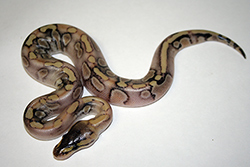
In Brantford, a branch of the Ontario SPCA seized more than 40 pythons stored in plastic containers. The occupants of the motel room were not present when officers attended to preserve public safety. Pythons are not legal in that municipality.

In Mission, British Columbia, the British Columbia SPCA discovered more than 100 snakes in a rented bungalow. Almost 50 illegal pythons were among this collection. All were seized and euthanized to preserve public safety. 

In other municipalities, like Hamilton, public safety officials are intervening in episodes were snakes may have been abandoned. These emerging snake stories have stimulated online comments and public interviews that show a spectrum of public responses from the fearful to the curious.

Yet to emerge is an industry response that includes an amnesty or assisted surrender program that can be accessed by breeders or pet owners. The focus on legislative reviews and discussion seems to have greater priority for the moment. Are snakes bearing this attention, negative publicity, abandonment and euthanasia without someone to speak for them? A review of the content so far, suggests this may be the case.