Showing posts with label blockchain. Show all posts

10 March 2018

VIDEO SATURDAY - Blockchain, Hydrophobic Surfaces, Accelerated Tech, Demographics and VUCA

We are pleased to present 12 minutes of viewing curated by InfoStream for your edification:


CIO - Don Tapscott explains why blockchains will rewrite business models and revolutionize industries. (3'11")


GE has invented nanostructured coatings and surfaces that are hydrophobic and delay the accumulation of ice or water on a particular surface. (2'16")


IBM - In 2015, Al Opher, Global Leader & Partner, Digital Operations, looked at the unprecedented number of technologies that are all hitting at once: virtual and augmented reality, embeddables, 3D printing, robotics, and cognitive. (1'33")


Stats Canada - National demographics can often mask major regional differences. (2'51")


Deloitte - We live and operate in a constant state of turbulence. Military planners call it VUCA. Disruptors are intensifying, requiring a decisive focus on Human Capital. (2'33")


18 January 2018

INVEST - Barclay's is Bullish on IBM's New Strategy in Cloud and Blockchain

A 'new dawn emerges' as Rometty Strategy Moves IBM

Image result for image for ginni rometty
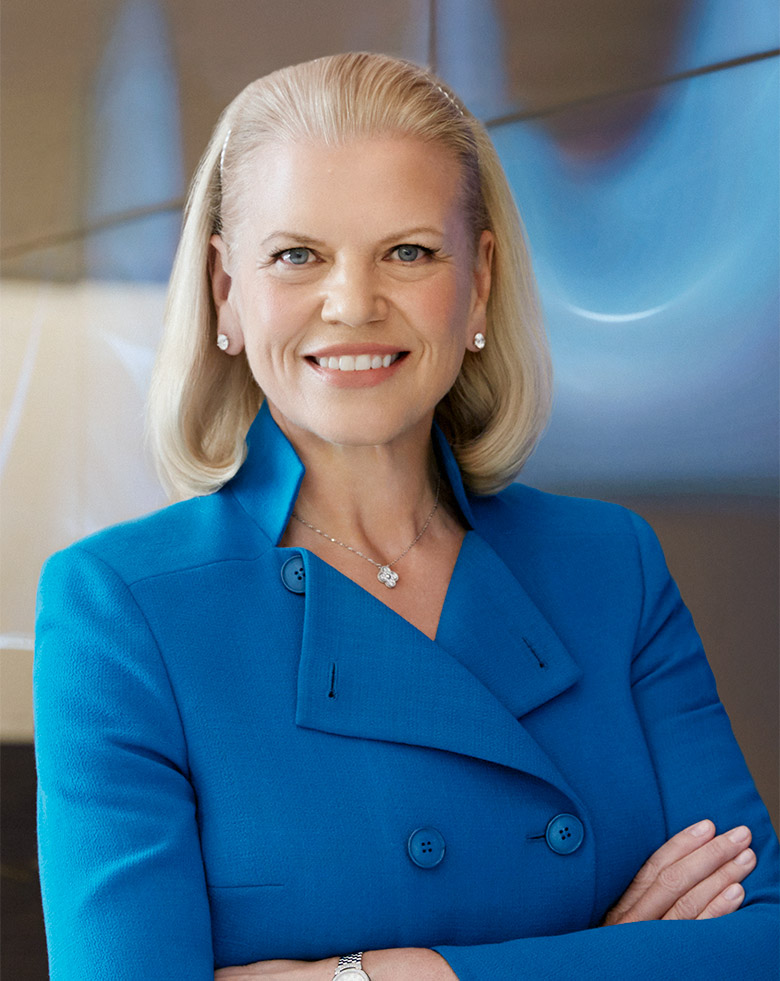
Ginni Rometty, CEO of IBM.
Barclays raised its rating on IBM stock to overweight all the way from underweight yesterday.
"We think that IBM could emerge as the next important cloud vendor after Amazon and Azure over time as customers seek a multi-cloud strategy to avoid vendor lock-in or technology complacency," wrote Barclays analyst Mark Moskowitz. "As a result, IBM's strategic revenue should surpass legacy revenue – implying the worst may be over."
The Barclay's analyst raised his price target to $192 from $133, representing 17 percent upside from Tuesday's close.
IBM has struggled and the company's revenue had declined for 22 quarters in a row.
Developments in analytics, cloud, mobile and security technologies are all being considered as a way to offset revenue shortfalls in the company's legacy products, according to Moskowitz. Roughly 46 percent of revenue in the third quarter came from these new strategic imperatives, while cloud revenue for the quarter was $4.1 billion, up 20 percent from the previous year.
One of the technologies highlighted by Moskowitz, blockchain may also be an area in which IBM could capitalize. It currently has 1,500 employees assigned to developing blockchain, hoping to leverage the popular technology with Walmart to address food safety.
"Eighty-four percent of chief investment officers plan to use multiple cloud vendors and IBM's initiatives with both blockchain and analytics could help the company become a more competitive vendor for certain cloud workloads," Moskowitz said. "Uptake of these solutions would benefit IBM revenue and help scale the company's cloud segment margin."
While not mentioned by Moskowitz yesterday, InfoStream sees IBM's move to serve up 'Watson' as a service announced by Rometty at CES 2016 as being vital to the future of the company.

13 December 2017

EMERGE - Blockchain Webinar CMO and the Next Era of Marketing

Inline image 1

REGISTER NOW

Jeremy Epstein, is the author of "Blockchain and the CMO" project. If you are in marketing you need to attend this Webinar: 


How does blockchain—as a trust machine—change advertising, data analytics, branding, and the customer experience? 


How does blockchain offer organizations an opportunity to differentiate and gain competitive advantage?

09 December 2017

INNOVATE - Blockchain Explorers - Adding Trust to the Ecosystem


Image result for ibm logoThe IBM Institute for Business Value global survey of nearly 3,000 executives uncovered a unique group - Blockchain Explorers. One of the biggest ways Blockchain Explorers are setting themselves apart is by embracing a platform business model. Find out what else they're doing differently:


Join members of the Blockchain Research Institute and explore a blockchain Proof of Concept (POC) activity that will add trust to your ecosystem.


29 August 2017

Cryptocurreny Market Cap Surpasses US$160 Billion

Image result for cryptocurrencyAccording to CoinMarketCap, the combined value of all publicly traded cryptocurrencies has set a new record, surpassing US$160 billion for the first time.
On August 28th, the value of ether, bitcoin and more than 800 other blockchain-based assets had surpassed $164 billion.

24 March 2017

BUSINESS - Blockchain Research Institute Launches in Canada

(Alex and Don Tapscott)
Don Tapscott, co-author of the best-selling book Blockchain Revolution with Alex Tapscott, announced the formation of the Blockchain Research Institute (BRI) at the DC Blockchain Summit.

Based in Toronto, Canada and funded by companies and governments from several countries, the BRI will conduct the definitive exploration of blockchain use cases, opportunities and implementation challenges.

A global team of dozens of experts will explore financial services, manufacturing, retail, energy and resources, technology/media, healthcare and government; as well as how this new technology changes the way companies are managed.

“We believe blockchain is a transformative technology for businesses. The Blockchain Research Institute with its brilliant team will deepen and enrich the knowledge about blockchain. We highly appreciate and fully support this effort and will contribute our deep expertise in business processes as the global leader in enterprise software,” Juergen Mueller, SAP Chief Innovation Officer, said in a release.

Founding members include:
  • Technology Industry – Accenture, IBM, SAP
  • Financial Industry –  Digital Asset, NASDAQ
  • Global Corporations – Pepsico, Centrica, Liberty Global
  • Government – Province of Ontario, University Health Network
  • Blockchain Pioneers – Nuco Inc., Paycase, Artlery, Votem, Cosmos, Youbase, Wisekey
  • Affiliate Organizations – The Hyperledger Project, the Chamber of Digital Commerce, Coala.io, Enterprise Ethereum Alliance

With the growth in cryptocurrency and slow death of cash, blockchain is being adopted by a wide variety of industries around the world.

Blockchain technology describes a distributed, highly secure platform, ledger or database where value – everything from money, stocks, bonds, intellectual property, and deeds, to music, art and even votes – can be stored and exchanged without powerful intermediaries.

Ross Mauri, General Manager z Systems, IBM, said, “Blockchain has the potential to address some of the world's most pressing challenges --  from streamlining trade, to establishing trust in transactions, to tracing provenance for food safety. By working with top experts from around the world, we’ll be able to take full advantage of blockchain’s inherent strengths -- an openly-governed, collaborative approach – to make global business more efficient and transparent for consumers."

Don and Alex Tapscott will lead the BRI as co-executive directors.

Not limiting itself to research, the Institute will actively work on strategies to make a blockchain economy happen.

Projected program deliverables include reports and tools that disseminate program conclusions among member organizations, monthly webinars and executive briefings.

A Program Summit for institute members will be held in the spring of 2018.


28 January 2017

FUTURE TRENDS - More and Diverse Industries Adopting Blockchain

The blockchain was introduced in the original source code for bitcoin and other cryptocurrencies, and it has been primarily associated with the transparent and real-time tracking of cryptocurrency.

The blockchain is, at its core, an unalterable, distributed, transparent ledger of all the transactions made within the chain.

Various industries are adopting the blockchain, or at least exploring the option of using blockchain technology.

Some of the most unexpected blockchain introductions are in education, where blockchain is being used to create “learn to earn” initiatives that tie learning (of any type) to displayable “Edublocks” that employers can view.

Some schools, notably the Media Lab at MIT and the University of Nicosia in Cyprus, have already started incorporating blockchain technology by generating cryptographically signed and verifiable certificates for graduates.

Another industry where blockchain technology is being tested is energy utilities.

There are test projects currently underway in both Australia and France, with promising results.

Jemma Green, co-founder of Power Ledger in Australia, told Brave New Coin, “Just as Airbnb and Uber have up-ended the hospitality and transport markets, Power Ledger has the potential to change forever the way we buy and sell energy to power our homes.”

The Power Ledger program allows users to sell excess solar energy to utilities companies or other consumers.

They use a hybrid blockchain in order to manage the many moving parts involved, such as the conversions from digital electricity meters to blockchain tokens.

The original trial is now expanding, and Power Ledger hopes to overcome regulatory hurdles and start licensing their business model in order to generate revenue.  

France is also exploring various blockchain applications for renewable energy, including not just prosumer home owners (home owners who both produce and consume solar energy), but also electric car charging.

Microgrids are another application of the blockchain in renewable energy, and microgrids are popping up in various places, including Brooklyn.

These micro projects are more in line with the cryptocurrency and blockchain ideal of moving away from large institutions and centralized control.

Other examples of this “outside the system” integration of blockchain and energy include SolarCoin and the IDEOLabs prototype SmartSolar technology.

These small, outside-the-box projects are exciting and will undoubtedly continue to grow.

But it is the adoption of blockchain by the very large institutions that were previously threatened by the technology that is currently most interesting.

Integrating solar energy into existing power grids through blockchain, for example, or bringing the blockchain into respected educational institutions like MIT.

The most notable example of the blockchain being adopted by the very institutions that it was designed to challenge is among the large banks.

Denmark is considering minting an e-kroner, which would mean that the blockchain is adopted within the present model of currency rather than disrupting and replacing it with cryptocurrency.

Even Visa is looking at adopting blockchain technology.

Blockchain technology is popping up in a number of unexpected places, and that’s a trend that is not slowing down – as Ars Technica put it, blockchains are the perfect technology for when everybody distrusts each other, and current global unrest means the world has never been more ready for a technology like this.

Prepare to see the blockchain in an industry near you!

About Tiffany Sostar
Tiffany is a writer, editor, academic, and animal lover who came late to her appreciation of pets. At 18, a rescue pup named Tasha saved her from a depression and she hasn't looked back. She has worked as the canine behaviour program coordinator for the Calgary Humane Society, and was a dog trainer specializing in working with fearful and reactive dogs for many years. She doesn't have any pets right now, but makes up for it by giving her petsitting clients (and any dogs she comes across on her frequent coffee shop adventures) extra snuggles.

15 January 2017

FUTURE TRENDS - Decrypting the Pros and Cons of Cryptocurrency

Although one of the greatest values of cryptocurrency is its transparency, it is notoriously difficult to get a good theoretical grasp on.

You might even call it cryptic, if you were inclined to puns.

In fact, the name points to the fact that the currency is generated using cryptography and sophisticated encryption algorithms.

The transparency that makes cryptocurrency so attractive to some financiers has to do with the blockchain, which is how cryptocurrency is tracked.

Each transaction is logged automatically, anonymously, and in an open-source and freely available ledger. This removes the need for a third party, such as a bank.

But what is cryptocurrency?

At its core, it’s money. But it’s not money like most people are used to.

Instead, cryptocurrency is generated, tracked, and stored entirely digitally. It is BitCoins, LitCoins, and Ether.

It has the potential to be the next evolution in global finance.

The move from gold to paper money was largely driven by portability, and led to the creation of fiat currency managed by banks.

The move from fiat currency to cryptocurrency, if and when it happens, will be a similar evolution.

Digital currency has some significant benefits.

It is less susceptible to fraud because it can’t be counterfeited, offers lower fees to users, is available to everyone with access to connected devices, and allows you to fully own your currency.

Apart from cash under a mattress, no current systems allow that same level of ownership.

But cryptocurrency has drawbacks, as well.

Not least of which is the fact that it’s a challenging concept to understand, and therefore it’s difficult to get widespread public backing.

When even cryptocurrency experts say that “Bitcoin’s value cannot be reduced to one single element or feature,” and require lengthy articles to define its value in various forms, it’s going to be a challenge for non-experts to grasp.

Beyond that initial difficulty, cryptocurrencies may be safer when it comes to certain kinds of fraud or theft, but they are at significant risk of loss due to technical glitches, human error in choosing weak passwords, and exchange businesses failing without reimbursing customers.

Cryptocurrency represents another technology that has the potential to radically disrupt current business practices.

It is a currency for a digital age – created online, tracked online, stored online.

But even in Kenya, the world’s leading adopter and innovator in mobile commerce, cryptocurrency is struggling to gain traction because of a lack of business adoption and available apps.

However, despite these early struggles, cryptocurrency is likely to continue making market gains.

In a destabilized global economy, cryptocurrency offers the potential for greater transparency and security than banks can currently offer, and as cryptocurrency is adopted, governments will increase regulation.

Increased regulation, although in many ways antithetical to some of the core values of cryptocurrency (with its roots in libertarianism) will offer stability and public trust.

And, once established, some writers believe cryptocurrency could offer a viable delivery system for a Universal Basic Income (UBI).

As technological disruption in the form of automation continues to threaten the current concept of work, the idea of a UBI has surfaced repeatedly as one possible solution.

About Tiffany Sostar
Tiffany is a writer, editor, academic, and animal lover who came late to her appreciation of pets. At 18, a rescue pup named Tasha saved her from a depression and she hasn't looked back. She has worked as the canine behaviour program coordinator for the Calgary Humane Society, and was a dog trainer specializing in working with fearful and reactive dogs for many years. She doesn't have any pets right now, but makes up for it by giving her petsitting clients (and any dogs she comes across on her frequent coffee shop adventures) extra snuggles.
14 November 2016

FUTURE TRENDS - The Slow Death of Cash

Cash is probably dying.

Slowly, perhaps very slowly, but it is almost certainly headed the way of the payphone and electronic currency is taking its place.

Although responses to this idea vary, and some are concerned about the risks associated with a cashless society, there are some good arguments that the death of cash is a good thing for both global and national economies.

Cash is slow and cumbersome, and notoriously difficult to keep safe.

It can be stolen, counterfeited, lost. It is both the object of crime – in the US there were 4,000 bank robberies in 2015 – and the enabler of crime. 

Electronic currency is safer, faster, and less expensive to maintain.

Although many people are concerned about hackers, cryptocurrency such as bitcoin offers the blockchain, a system that ensures every transaction is legitimate and is tracked in an open, transparent, online ledger system.

Blockchain’s educational website makes the argument that blockchains “provide an opportunity to build a global infrastructure untethered from the stability or permission of governments and institutions.”

Although that might sound like a utopia to some, it raises serious concerns about issues like taxation, and the social services and infrastructure maintenance that depends on tax revenue.

Although Blockchain Revolution, by Dan and Alex Tapscott does not address tax specifically, the book does include a chapter on how bitcoin and blockchains have the potential to revolutionize government by introducing true transparency and agency over how money, votes, and even property move between individuals and organizations.

They see the potential in bitcoin and blockchains to change everything from banking to government to the very foundations of capitalism and the corporate entity.

Does it sound confusing?

That’s because it is. The shift to electronic currency is one that has been happening globally for years.

This is a change in how money is accessed, but not a fundamental shift in how money is conceptualized.

There’s a debit card in every wallet, and most banks now accept cheques via smartphone photo, but money is still money. The value of e-money is still tied directly to the amount of fiat currency (any legal tender issued by a central authority and backed by regulation) that it represents.

Cryptocurrency, such as bitcoin, is fundamentally different.

It is disconnected from governmental and banking authorities, and is only beginning to edge up to the legislative and regulatory realities that will make it viable for the average person.

It will take time for cryptocurrency to reach a broad audience, and even longer for it to replace either cash or electronic currency.

One element at play is humans’ psychological attachment to physical money.

It’s been around for thousands of years, and the very untraceability that makes cash the focus of criminal activity also makes it valuable to anyone who wants to make a purchase that is not digitally linked to their identity.

However, despite the challenges facing digital currency in either crypto- or e-money forms, digital transactions are here to stay.

Kenya has the world’s leading mobile-money system, M-Pesa, which is used by more than 17 million Kenyans. The system relies entirely on mobile phones, and has made transferring money easier, faster, and safer, and bypasses banks entirely. 

However it happens, and at whatever pace, it’s clear that money is going digital and even if cash doesn’t disappear in the next decade, its place in people’s lives will be shifting.

By Tiffany Sostar
Tiffany is a writer, editor, academic, and animal lover who came late to her appreciation of pets. At 18, a rescue pup named Tasha saved her from a depression and she hasn't looked back. She has worked as the canine behaviour program coordinator for the Calgary Humane Society, and was a dog trainer specializing in working with fearful and reactive dogs for many years. She doesn't have any pets right now, but makes up for it by giving her petsitting clients (and any dogs she comes across on her frequent coffee shop adventures) extra snuggles.

18 October 2016

Top 10 Predictions from Gartner

From Augmented Reality to Web Browsing Without a Screen


Image result for gartner logosThe sold out Gartner Symposium @Gartner_SYM in Orlando, Florida is being attended by C level IT participants from across North America.  Yesterday Gartner, revealed the top ten predictions for 2017 and beyond. They focused on three fundamental effects of continued digital innovation:

  • experience and engagement
  • business innovation
  • the secondary effects of increased digital capabilities

Daryl Plummer, Managing Vice President, Chief of Research
and Gartner Fellow stated:
Image result for gartner 2017 symposium images
Gartner images

"Last year, we said digital changes were coming fast. This year the acceleration continues and may cause secondary effects that have wide-ranging impact on people and technology."


The top 10 Strategic Predictions from Gartner:

  1. By 2020, 100 million consumers will shop in augmented reality.
  2. By 2020, 30 percent of web browsing sessions will be done without a screen.
  3. By 2019, 20 percent of brands will abandon their mobile apps.
  4. By 2020, algorithms will positively alter the behavior of more than 1 billion global workers global workers.
  5. By 2022, a blockchain-based business will be worth $10 billion.
  6. By 2021, 20 percent of all activities an individual engages in will involve at least one the top-seven digital giants.
  7. Through 2019, every $1 enterprises invest in innovation will require an additional $7 in core execution.
  8. Through 2020, IoT will increase data center storage demand by less than 3 percent.
  9. By 2022, IoT will save consumers and businesses $1 trillion a year in maintenance, services and consumables.
  10. By 2020, 40 percent of employees can cut their healthcare costs by wearing a fitness tracker.


Imagine these predictions acting on your business and your investment portfolio. You may wish to reset (future proof) your plan for the things that matter most.