Showing posts with label Amazon. Show all posts

12 March 2018

INNOVATE - Amazon Targets Counterfeit Merchandise

Amazon's Transparency Program to Prevent Counterfeit Merchandise Seeks to Add 1,000 brands in 2018


Title
Amazon Transparency Program
In the spring of 2016, Amazon began trialing a new approach to eliminating counterfeit product. The program was tested on Amazon products for the first year. It expanded to a few select vendors in mid 2017 but in 2018 Transparency is expanding to hundreds of other brands.

According to Amazon, there are three types of brands that need this protection:

  1. Brands that value the authenticity of their products and can be negatively impacted by counterfeit merchandise.
  2. Brands with product manufactured through “3rd shift” or secondary factories.
  3. Brands launching new products likely to attract counterfeit copycats.


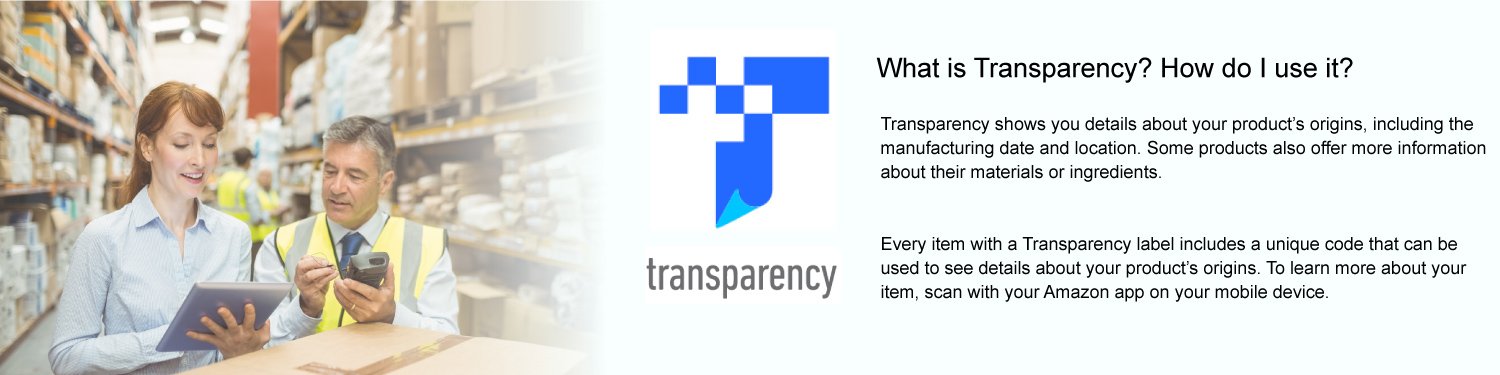
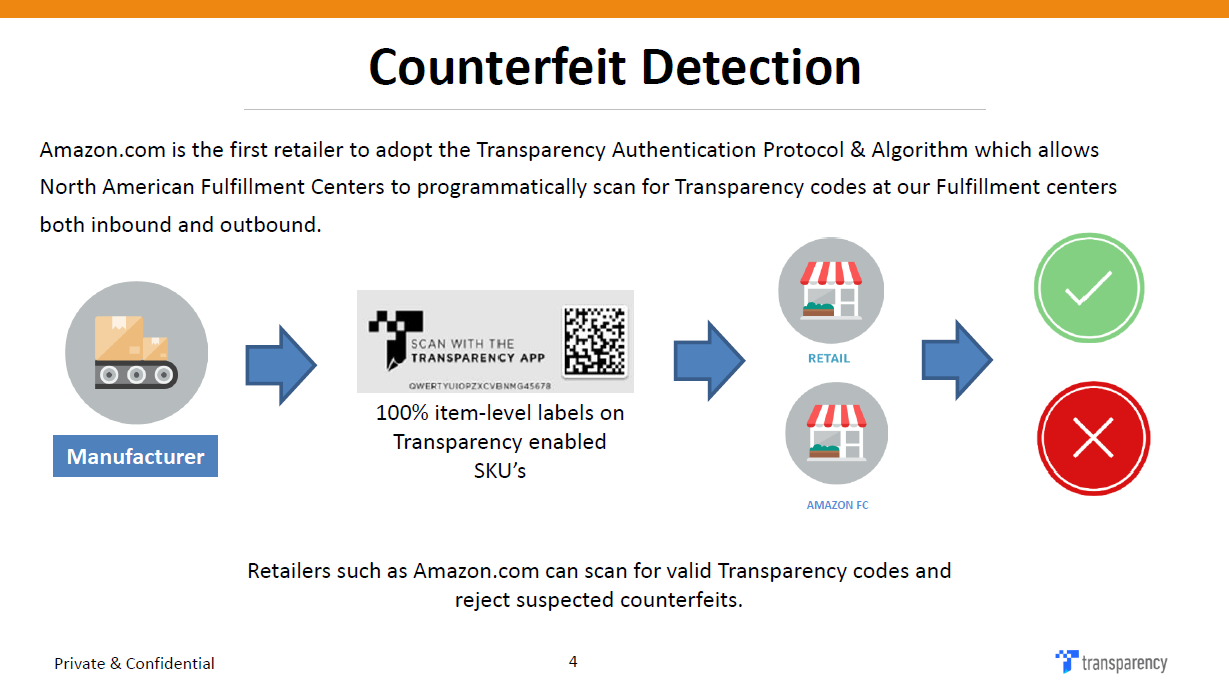
This cool program uses the Amazon app to provide consumers with information about where the product was manufactured and other details that validate the  authenticity. The consumer uses the Smartphone app to take a picture of the 2D barcode and automatically sees the information associated with that SKU.

Title
Transparency Label

The Transparency Program identifier label looks like this:

Amazon provides a unique 26 digit alphanumeric code related to the authenticity information for each product enrolled in the program. The manufacturer applies the code to the product prior to delivery so the Amazon fulfillment centre is able to validate authenticity during the product acceptance phase. The manufacturer receives global protection by applying the code to each product no matter which channel it sells through. Consumers use the code to verify the product no matter where it is purchased, but will be assured of accredited merchandise when they acquire the product through Amazon.

According to Amazon, the program will add between $0.01-$0.05 to the cost of each item depending on the volume. Amazon product acceptance protocols are expected to discover most counterfeit merchandise, however, consumers may also report vendors selling counterfeit product. Once registered, Amazon will notify all sellers that Transparency codes are required and will not accept product whether sold by the brand, a third-party seller or Amazon Retail.

Amazon Marketplace features millions of independent vendors across the globe who list hundreds of millions of items. Since the launch 10+ years ago, Amazon Marketplace accounts for over half the company's e-commerce volume. This rapid expansion has forced Amazon to deal with a surge in counterfeits and unauthorized selling.

CNBC recently told the story of Wee Urban owner Holly MacLean. After reaching a peak of $500,000 in baby clothing sales on Amazon Marketplace in 2016, she saw revenue plunge 80 percent in 2017 because of counterfeit and copyright infringement issues. 

According to CNBC, Amazon has invited "early adopters" to trial the Transparency program for their products. Bang & Olufsen, Victorinox Swiss Army and 3M are said to be among those invited. 


Amazon plans to roll Transparency out across all Amazon marketplaces and any brand by the end of 2018. Those interested in learning more can email Amazon at:


06 March 2018

BRAND - Amazon Release Shows Amazing Growth in Illinois

On August 10, 2015 Amazon announced a first fulfillment center in Illinois


Related imageSince the initial building’s launch, Amazon has opened eight other fulfillment centers, two Prime Now hubs, an Amazon Fresh site, a sortation center, four delivery stations, an Amazon Books store, and a corporate office in the Prairie State.

This expansion has resulted in Amazon investing hundreds of millions of dollars into Illinois’s economy, both in fulfillment infrastructure and compensation to its 10,000 current employees. As a snapshot, according to a report by the company’s Economics team, Amazon’s investments in Illinois from 2014 through 2016 resulted in an additional $200 million to the state’s economy. Using Input-Output methodology and multipliers developed by the U.S. Bureau of Economic Analysis, Amazon estimates its investments in the state have created an additional 7,000 indirect jobs on top of the company’s direct hires.


02 March 2018

ACQUIRE - The Impact of Amazon's purchase of RING for More Than US$1B

Amazon Continues to Invest in the Last Mile (Yard) of Customer Access


Image result for ring

The Amazon purchase of Ring could cost the company as much as US$1.8B. However, virtually all analysts and observers find it to be a good strategic and tactical move for Amazon. Past InfoStream articles have shown that Amazon wishes (needs) to own the path to the consumer to continue and expand the client ecosystem it has developed. 

In late December, the ecommerce giant announced the purchase of Blink to enhance the Amazon Key service and devices. Earlier this year Amazon announced it would move to disrupt Fedex and UPS with services for the 'last mile' of home and business delivery. With Amazon Key, Amazon Logistics, Amazon Flex and Fulfillment by Amazon (FBA) it seems Amazon is well on the way to accomplish this goal. 

The reader should not overlook the fact that integrating Ring with Amazon Home services and devices like Amazon Echo, ensures the company is also poised to disrupt the huge field of Home Security.

The one aspect of this purchase that analysts don't seem to understand is the price tag. Perhaps they are not pricing into this deal the competitive advantage and cost of time and resources to own and control this last 'yard' of the path to the customer. The one big winner in this transaction aside from the investors who supplied early stage capital to Ring will be the customer.

Here are the important story links:

The original Reuters article on Wednesday, February 27

Quartz Article and Videos of Shark Tank's rejection of Jamie Siminoffs Big Idea - Smart Doorbells (4'56")

CNBC Video of Kevin O'Leary on Why He Won't Cry Over Spilt Milk (3'44") 

CNBC Video and Article - the Impact of the Ring Deal on Security Companies like ADT (4'43")

23 February 2018

MARKET - A Weekly Review of Amazon Stories and Notes

Investors Buy Into Amazon While Grocery and Pharmacy Dash For Cover 


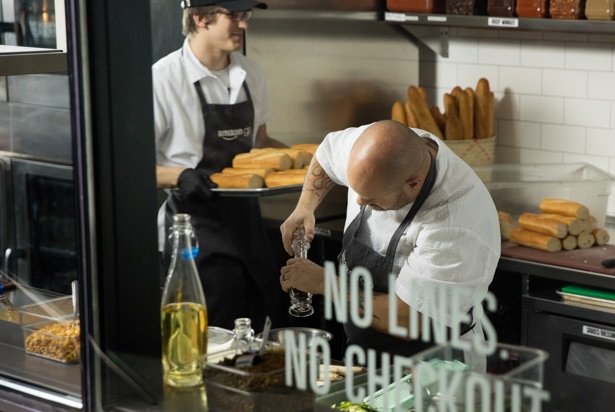
chefs-in-kitchenRecode reports Amazon Go plans to open as many as six more cashierless Amazon Go stores this year. Watch for openings in Seattle where Amazon Go was launched and in Los Angeles where Amazon's first experiment with Whole Foods grocery delivery took place.

Everyone wonders how Walmart will respond to the Amazon Go challenge. In December Recode reported Walmart was experimenting with a new store model called Code Eight and preparing a new cashierless experience called Project Kepler that aims to reimagine in-store shopping with the help of technologies like computer vision.

Earlier this week Quartz reported that Amazon was wreaking havoc on grocery. They suggest this disruption is largely responsible for America’s largest grocery chain Albertsons bid to acquire Rite Aid. This latest move by Albertsons, which also bought meal-kit startup Plated for an undisclosed sum in September, and partnered with grocery-delivery service Instacart in late November, will give Albertsons 4,900 locations across most of the US, and total revenue of nearly US$83B. As everyone can see grocers and pharmacies are scrambling for cover. 
Will Amazon Rule the World? 
Hard to tell at this point, but it is clear the disruption afforded by Jeff Bezos' master plan is significant. Amazon wants to deliver everything you want to your doorstep, anywhere in the world. A Wall Street Journal (WSJ) video shows the e-commerce giant faces several challenges in its pursuit of a global empire. WSJ analyst Karan Deep Singh breaks down the basics with the help of an Amazon delivery box:


How are investors responding?
When Amazon.com announced fourth quarter sales were up 38% to US$60.5B earlier this month investors began to drive up the share price. The Walmart Q4 stumble reported earlier this week has increased the 'hurt' for Walmart and drove Amazon shares even higher. The Amazon Investor Page graphically shows the response.


13 February 2018

DISRUPT - Amazon Focuses on the Last Mile, FedEx and UPS

Amazon Flex, Amazon Logistics and Fulfillment By Amazon (FBA) Services May Disrupt Existing Delivery Services

Image result for amazon logos
Over the past few days, stories from several sources have speculated that Amazon intends to own the 'Last Mile' in ways that will disrupt FedEx and UPS, the two largest delivery services. Yesterday these stories gained enough momentum that share prices for FedEx and UPS fell. However, at the end of trading today share prices had recovered or gained strength.

InfoStream, noted Amazon's interest in controlling the 'last mile' in December when Amazon acquired Blink to supplement its Amazon Key service. The two services that show just how interested Amazon is in becoming a disruptor  are Amazon Flex and Amazon Logistics

Amazon Flex is aimed at recruiting delivery people in major centers who can use the Amazon technology and smartphone tools to create a flexible contractor business they own. It seems quite well thought out and the online commentary from those involved seems mostly positive. The model 'uberizes' Amazon delivery services to support Amazon Prime (two day service) and a developing new service called Amazon Prime Now (2 hour service) to support the Whole Foods acquisition. Amazon Flex also recruits contractors who have the equipment and licensing to deliver services for the 'middle mile' in the Amazon delivery chain.

Amazon Logistics is aimed at expanding logistical services throughout the delivery chain first for Amazon products, then Amazon Marketplace users and eventually other businesses who may wish to use the competitive Amazon Logistic and Delivery services that compete with Fedex or UPS. Amazon began developing the logistics services for its own products in 2016 and now is expanding the service to the Amazon Marketplace users.

All of this activity has created quite a stir. 

Retail Dive in an article entitled 'Taking the Amazon battle to last-mile delivery seriously' suggests the industry needs to take this Amazon move very seriously because of the implications for retailers and delivery services. 

Forbes published an article in November entitled 'Why FedEx and UPS Don't Need to Worry About Amazon' suggesting the scale of the anticipated Amazon moves would not be a threat to either of these existing services. 

Even if the scale doesn't threaten at this point, one wonders if this is not a good strategy for Amazon in the long run. For instance, it will improve the bargaining power for pricing the services is does use from these other logistical suppliers; It refactors the logistics model for the industry; It will also add competitive pressure that eventually can lower the acquisition metrics if Amazon should decide to buy out one of these services; and finally, It generates a number of benefits for the most important element of the market, the consumer.

Reviewing the Amazon Apps on Google Play is quite revealing.

01 February 2018

MARKET - Amazon Reports Q4 Sales up 38% to US$60.5B

Amazon Q4 Performance Drives Market to US$1,477.10 per Share in After Hours Trading

Image result for amazon images

The Amazon webcast earlier this afternoon was an inspiring performance for this Ecommerce giant. The links to the press release and webcast are available at the bottom of this article.

Financial Highlights from the webcast:
  • Common shares outstanding plus shares underlying stock-based awards totaled 504M on December 31, 2017, compared with 497M one year ago.
  • Net sales increased 38% to US$60.5B in Q4, compared with US$43.7B in Q4 2016.
  • Operating income increased 69% to US$2.1B in Q4, compared with operating income of US$1.3B in Q4 2016.
  • Net income was US$1.9B in Q4, or $3.75 per diluted share, compared with net income of US$749M, or $1.54 per diluted share, in Q4 2016. [Includes a provisional tax benefit of the U.S. Tax Cuts and Jobs Act of 2017 of approximately US$789M]
  • Net sales increased 31% to US$177.9B in 2017, compared with US$136.0B in 2016.
  • Operating income decreased 2% to US$4.1B in 2017, compared with operating income of US$4.2B in 2016.
  • Net income was US$3.0B, or $6.15 per diluted share in 2017, compared with net income of $2.4B, or $4.90 per diluted share, in 2016.

Other Webcast highlights:

  • More than five billion items shipped with Prime worldwide in 2017.
  • More new paid members joined Prime in 2017 than in any previous year — both worldwide and in the U.S.
  • Fire TV Stick and Echo Dot were the best-selling products in 2017 across all of Amazon.
  • Amazon launched new ways for developers to earn money building for Alexa, including paid skill content through in-skill purchasing, premium subscription content, and a more frictionless checkout experience with Amazon Pay.
  • The Alexa Skills store now offers more than 30,000 skills, including new developer tools for Alexa Gadgets.
  • Customers now use Alexa to control more than 4,000 smart home devices from 1,200 unique brands.
  • Amazon also introduced new tools and developer kits, including the Alexa Mobile Accessory Kit and Alexa Premium Far-Field Voice Development Kit, to make it easier for developers to bring Alexa to more devices.
  • Amazon hired nearly 130,000 employees globally in 2017, excluding acquisitions.
  • Amazon welcomed several new device makers to the Dash Replenishment program that enables smart appliances to automatically reorder consumables when supplies run low, including 3M, Hewlett-Packard, Kenmore, and Bluestream. 
  • Amazon launched two furniture brands: Rivet, offering affordable and versatile mid-century modern furniture ideal for smaller spaces; and Stone & Beam, offering durable and stylish furniture for the modern household.
  • Fulfillment by Amazon (FBA) shipped billions of items for small and medium-sized businesses, worldwide in 2017.
  • Prime selection in India now offers members more than 25 million local products from third-party sellers.
  • Amazon celebrated its 10th holiday season of Frustration-Free Packaging — an invention designed to reduce waste and delight customers with easy-to-open, 100% recyclable packaging. Amazon’s sustainable packaging innovations have helped to eliminate nearly 215,000 tons of packaging material and 360 million boxes.
  • Amazon Go, a new kind of store with no checkout required, is now open to the public in Seattle. The checkout-free shopping experience is made possible by the same types of technologies used in self-driving cars: computer vision, machine learning, and sensor fusion.
  • Amazon Web Services (AWS) now operates 52 Availability Zones across 18 infrastructure regions globally.
  • AWS continues to accelerate its pace of innovation with the release of 497 significant new services and features in the fourth quarter, bringing the total number of launches in 2017 to 1,430.
  • AWS introduced four Artificial Intelligence (AI) services that allow developers to build applications that emulate human-like cognition: Amazon Transcribe for converting speech to text; Amazon Translate for translating text between languages; Amazon Comprehend for understanding relationships and finding insights within text; and Amazon Rekognition Video, a deep-learning powered video analysis service that tracks people, detects activities, and recognizes objects, celebrities, and inappropriate content.
  • AWS launched Alexa for Business, a new service that brings Alexa into the workplace to help employees be more productive and organized on both personal and shared Echo devices by simply using their voice. Employees can use Alexa for Business to find an open conference room, make phone calls, check calendars, schedule and start meetings, manage to-do lists, set reminders, and even find information in popular business applications like Salesforce, Concur, or Splunk.

“Our 2017 projections for Alexa were very optimistic, and we far exceeded them. We don’t see positive surprises of this magnitude very often — expect us to double down,” said Jeff Bezos, Amazon founder and CEO. “We’ve reached an important point where other companies and developers are accelerating adoption of Alexa... Much more to come and a huge thank you to our customers and partners.”

Q4 Press Release

Q4 Webcast Replay and Slides

Eight minutes with Jeff Bezos Recorded in 2009


About Amazon:
Amazon is guided by four principles: customer obsession rather than competitor focus, passion for invention, commitment to operational excellence, and long-term thinking. Customer reviews, 1-Click shopping, personalized recommendations, Prime, Fulfillment by Amazon, AWS, Kindle Direct Publishing, Kindle, Fire tablets, Fire TV, Amazon Echo, and Alexa are some of the products and services pioneered by Amazon.

31 January 2018

DISRUPT - Amazon, Berkshire Hathaway and JPMorganChase Partner for Healthcare

Improving Employee Satisfaction and Reducing Overall Costs


Related image
Increasing Satisfaction, Lowering Cost
Three large American employers announced yesterday they will partner and develop ways to deliver healthcare that provides greater satisfaction for their employees and reduces their overall cost. 

These three companies intend to bring scale, complementary expertise and an ecosystem that is free from profit-making or incentives that seem to be present constraints. These three organizations will create an ecosystem that has more than 1.1M employees (Amazon 542K, Berkshire Hathaway 368K, JPMorgan 234K). To put this in context, Walmart has 1.4M employees in the US and Google has 62K.

The joint press release noted that tackling the enormous challenges of healthcare and harnessing its full benefits are among the greatest issues facing society today. By bringing three of the world’s leading organizations into this new and innovative construct, they hope to bring a fresh approach to these critical matters.
“The ballooning costs of healthcare act as a hungry tapeworm on the American economy. Our group does not come to this problem with answers. But we also do not accept it as inevitable.” said Berkshire Hathaway Chairman and CEO, Warren Buffett.
“The healthcare system is complex, and we enter into this challenge open-eyed about the degree of difficulty. Success is going to require talented experts, a beginner’s mind, and a long-term orientation,” said Jeff Bezos, Amazon founder and CEO.
“The three of our companies have extraordinary resources, and our goal is to create solutions that benefit our U.S. employees, their families and, potentially, all Americans,” said JPMorgan Chase Chairman and CEO, Jamie Dimon. 
While this effort is in its early planning stages, the formation of the company will be jointly spearheaded by Todd Combs, an investment officer of Berkshire Hathaway; Marvelle Sullivan Berchtold, a Managing Director of JPMorgan Chase; and Beth Galetti, a Senior Vice President at Amazon. The release says that the longer-term management team, headquarters location and key operational details will be communicated in due course.

That this alliance will produce disruption in the healthcare sector cannot be disputed. That the partners hope to construct a new healthcare ecosystem using their scale and expertise without a need for profit is being watched with great concern by those who profit in this sector. 

Amazon Marketplace has already claimed a place in healthcare that is worrying those involved in Patient Benefit Management (PBM) and those involved in supplying pharmaceuticals like Walgreens and Walmart.

Can these partners create a win for themselves and then for other large employers is the question on the mind of nearly everyone. In December, InfoStream published an article on the CVS acquisition of Aetna which illuminated disruption in healthcare for humans.  Dental care and veterinary  healthcare are other areas that are ripe for aggregation and disruption.

Notice that Jeff Bezos, used the term 'a beginners mind' in his quotation. The process of rethinking a market when everyone else is clearly 'doing the same thing and expecting a different result' requires this approach. When consumer satisfaction increases, transparency is delivered and healthcare costs decrease a win will be certain.  

Here are links showing disruption has been aimed on healthcare for sometime:

2018Jan30 Bloomberg - Video on this Disruption 

2017Oct20 Forbes - Amazon to Disrupt Pharma

2017Oct05 Huron - Addressing Healthcare on Amazon 

2017Jul24 CNBC - Amazon Showing interest in Healthcare 

2017Jun10 Modern Healthcare - Amazon poised to deliver disruption in medical supply industry 

2016Feb25 Slideshare - Healthcare Disrupted: Next Generation Business Models and Strategies for Life Sciences 

08 January 2018

INNOVATE - Consumer Electronic Show (CES) 2018 Opens in Las Vegas Tomorrow

You Know Change Has Arrived when the Largest Consumer Show in the World taps Ford for the Opening Keynote


Hackett, Ford Motor Company
Under the leadership of Bill Ford and Jim Hackett, Ford is strengthening its automotive business and accelerating a strategic shift to capitalize on opportunities during a transformative period for the auto industry and the broader mobility space.

In March 2016, Hackett was named chairman of Ford Smart Mobility LLC, a subsidiary of Ford formed to accelerate the company's plans to design, build, grow and invest in emerging mobility services.

The early press shows a huge number of product introductions in the areas of transportation, intelligent homes and technology integration. A ramp up in the war between Google and Amazon for control of the intelligent home is expected. Here are some links if you want to follow along:


30 December 2017

INNOVATE - Operational Technology (OT) Merges Minds and Machines

Video Saturday - OT Improving and Augmenting Human Activities 

Operational Technology (OT) is as Gartner explains: “Hardware and software that detects or causes a change through the direct monitoring and/or control of physical devices, processes and events in the enterprise.”

Gathering lots of information as Information Technology (IT) traditionally produces is of little value unless it can act in real time to change something in the enterprise or ecosystem. Here 2 examples of OT curated by InfoStream staff:

GE's Tumbler Ridge project shows OT being used to manage a large scale wind farm that can produce enough electricity to power 54,000 homes:


Amazon now employs more than half a million people and uses OT to augment and improve the performance of them in each of the Fulfilment Centers:


29 December 2017

ACQUIRE - Amazon Buys Blink and Improves Access

The more things change, the more they stay the same

This saying (originally in French), seems to apply to current trends in retail. If you were born before 1960, and you lived in a town or city you will remember delivery men as well as the need for a 'milk and package receiver'. In fact,  product delivery of every description is now a global growth market. 
Image result for image of milk delivery door
In 1927, the 'Majestic Milk and Package Receiver' was an important element of urban living. The simple and secure device consisted of two cast iron frames and doors connected by an adjustable steel body that was installed in the wall of the kitchen. 

Manufactured in Huntington, Indiana and patented on January 18, 1916, this system served the urban need of the consumer and the delivery service. The sound of the door being closed early in the morning, sent children running to get the milk, cream, butter, cheese or bread left behind by the delivery man. It was a simple, secure solution for receiving regular deliveries.

Now, almost 100 years later, Amazon has purchased Blink a company that has perfected online security to help solve the problem of access for home product delivery. 
Echo (2nd Generation) - Charcoal Fabric
Last week when the transaction became public, analysts agreed that Amazon would integrate this technology to complete the 'last mile' of their 'in home technology' and logistics platform to become the consumer's goto source for everything. 

Imagine speaking product needs into Alexa and receiving products securely inside the home with Blink in hours or days.
Blink was founded in 2014 and got its start via a crowdfunding campaign that raised over $1 million to develop "a totally wireless home monitoring system". Amazon already has home video cameras and entry products with its Cloud Cam and Amazon Key offerings. However, what Blink brings to the table is expertise in building connected, wireless home monitoring and security technology without a complicated installation.

Blink’s Doorbell operates on two AA batteries which they claim should last for about two years of regular use. Furthermore, it costs a lot less than competitors like Ring and has many similar features including motion detection, two-way audio, waterproofing and night vision.

Why is this important:
Some experts believe the 'final mile' of product and service delivery is determined by who controls (secures) access to the home. Watch for Amazon to use this as a competitive advantage with their Prime customers and preferred vendors. Once again it shows that emerging innovators are most valuable to those who need the expertise to create or sustain a competitive advantage. A Fortune panel of experts says that Amazon has changed the disruptor conversation.

27 December 2017

EMERGE - Tophatter Produces Addictive Online Auctions

Tophatter Claims 90 Second Auctions are an Entertaining Way to Buy Online 


Imagine 16 million online shoppers (TOPHATTER'S number) focused on over ninety items each one in an individual auction window showing the retail price, the number of bidders, the current bid, the cost to ship and a countdown bar that displays the bidding process (Accepting Bids, Going Once, Going Twice) until SOLD.

The entertainment value of watching things go at prices that are unexpected, eventually draws buyers and sellers to participate, according to some observers. Over the holidays, we observed several sessions and experienced the addictive nature of this auction medium. Although not registered as a buyer, one could easily imagine how setting aside $50 for a few hours of fun and entertainment with surprising results (purchases) could be fun.

Online auctions aren't new, as those who follow this sort of thing know. Platforms such as eBayInvaluable (France) and Auction King (Sacramento, California) provide a price discovery service and logistics for sellers as well as some level of vendor trust indication for buyers. Platforms like Kijiji and Craigslist compete with print media classified advertising to bring together buyers and sellers for price discovery. Platforms like Amazon, Alibaba and Walmart try to replicate the whole shopping experience for the online customer with huge investments in logistics and inventory to secure customer satisfaction for their own brands and those they serve.

However, what seems novel about the Tophatter platform is the way this service adds a measure of gamble and entertainment to the process. TOPHATTER promises vendors, the fastest growing mobile shopping app for professional sellers, businesses, and brands.

WHY IS THIS IMPORTANT:
This platform provides another low cost path to the consumer with a novel client experience factor. Since streaming video is influencing the consumer to stay out of the marketplace faster than anyone anticipated, adding a window to the entertainment screen so consumers can play in an online auction may have surprising results. Watch for platform competitors, for brands using the service to introduce new products and for the impact on liquidators like the 'Dollar Store' etc.

19 December 2017

ACQUIRE - Target buys Shipt for US$550M Cash

Target ramps up same day delivery to compete with Walmart and Amazon


According to TechCrunch, Target's acquisition of the Birmingham-based online grocery delivery service Shipt, marks the largest known acquisition of a venture-backed company in the state of Alabama.


According to an article in RetailDive today, Daphne Howland expects Shipt, to be a wholly owned Target subsidiary, operating independently under CEO Bill Smith. The company was founded in 2014 and operates in more than 72 U.S. markets. The online service enlists a network of more than 20,000 "shoppers" who pick out customers' orders and deliver them for an average of $20 per order. 

Back in August, Target acquired Grand Junction, a San Francisco based transportation technology service founded the same year as Shipt (2014). According to Ms. Howland, the purchase of these two operations is based on two essential ideas: that retailers know their inventory really well and that a slew of local and regional delivery companies already exist. The key has been to match those two things up, via technology. In both cases, Target is accelerating its same-day services by acquiring technology, infrastructure and talent from established players.

Sucharita Kodali, Vice President & Principal Analyst at Forrester Research, published her prognosis for the Target acquisition of Shipt, in Forbes magazine yesterday. She continues to see issues with adoption of paid delivery services and expects to see the free delivery service offered by Walmart as well as Amazon Prime, as services that will be hard to beat.  

Why this is important:
It is clear that retailers are acquiring emerging companies that already exist with expertise, management talent and ecosystems which allows the retailer to gain traction quickly. Building your own technology and infrastructure is too costly and time consuming to be an appropriate competitive response in this environment.

06 December 2017

100 Years Ago - Largest Man-Made Explosion Rocks Halifax

Earlier today, Halifax commemorated the 100th anniversary of the Halifax Explosion


Army & Navy Brewery after Halifax ExplosionWe have provided several links to a horrific story that took the lives of 2,000 people and injured 9,000 more. 

If you visit Halifax Nova Scotia, you will find historical exhibits remembering a day that changed the lives of thousands of people forever. 

In case you don't know this story click on these links:

The CBC Story

Colourized photos of the aftermath

An animated look at a shipping accident 

Books available on Amazon

23 November 2017

ACQUIRE - Bell buys Alarm Force for C$166M Cash

Image result for bell logo

Two weeks ago, BCE Inc. offered C$16.00 per share to acquire AlarmForce Industries Inc., a leading home security and automation firm in Canada. 


Alarm Force is said to have 102,000 subscribers paying an average monthly fee of C$35.00. The transaction is expected to close in January 2018. 

Bell's offer represented a 71% premium to AlarmForce's closing share price of $9.34 on November 6, 2017 and a 70% premium to the 20‐day volume weighted average price for the period ending November 6, 2017.

George Cope, President and CEO of BCE Inc. and Bell Canada said the acquisition would "Leverage Bell's network and service leadership and our place in millions of Canadian homes. We look forward to growing our nascent position in security and automation services to ensure Bell residential customers are at the leading edge of connected home innovation."
While most analysts believe the transaction isn’t material to Bell’s bottom line we see the transaction as part of a strategic move.
RBC Capital Markets analyst Drew McReynolds advised clients, that “Strategically, we believe the acquisition highlights the growing battle among telecom operators to own the home as well as the desire to tactically and actively participate in over-the-top services (such as home security and home automation),” 

Barclays analyst Phillip Huang was quoted as saying the deal, (less than 0.2 per cent of BCE’s market cap) is “a small acquisition that serves big purposes." In his message to clients Huang noted that AlarmForce is another product that can be bundled with internet, TV and telephone. Bundled customers are less likely to change providers due to the hassle. For network providers, a reduction in customer churn is desirable.

More details are available from the press release.

WHY THIS IS IMPORTANT
Network providers, online retailers and equipment manufacturers are all chasing the 'connected home'. Amazon's Echo and Echo Dot as well as the Google Home devices are prime examples of the race to 'own the home'. Adding innovative applications that allow these devices and the network connections owned by large players like Bell, Rogers, Telus and Shaw to be more effective and productive is the next battlefield. So who will win? Those who currently own the cable, wired and wireless connections to the home or those with the largest pool of content, the most available products and services or the most applications that consumers use. Stay tuned.

05 May 2017

DIGITAL - Amazon Moving Further into Kids' Digital Market

Amazon has taken two significant steps in the kids’ digital media market in the last two months.

First, in April, they introduced a suite of tools for both parental monitoring and engagement on their well-reviewed kid-friendly FreeTime subscription service.

The new parent dashboard allows parents to see what their kids are watching, reading, and playing, and also track how much time they’re spending in each digital environment.

This kind of software-based tracking is somewhat controversial, and largely ineffective as children mature into teenagers (talking works better with teens).

But in the rapidly changing digital world and with kids as young as three and four engaging with games and shows on mobile devices, it’s viewed as a necessary part of responsible parenting.

The second major element in Amazon’s new parental toolkit is the Discussion Cards.

The Discussion Cards are designed to facilitate productive and meaningful conversations between parents and kids about what the kids are engaging with in the FreeTime service.

The cards are written by Amazon’s own contenteEditors, and there are already thousands of cards available relating to the existing content within the service, and also some of the additional content that is frequently added to FreeTime.

The added element of suggested discussion topics is an innovation in the market, and is part of Amazon’s consistently parent-friendly approach to kids’ products.

Other examples of their engagement with this market include their insured kid tablets, and the comprehensiveness of their existing parental controls.

FreeTime, for example, allows parents to limit screen time and set ‘pause time,’ to ensure kids aren’t using the service when they need to be sleeping.

One area that parents will be watching is the inclusivity of the content.

Content curation has come under fire when parent’s interests conflict with children’s rights, particularly when it comes to accessing information about gender and orientation.

For trans or queer kids, access to information and representation can be a lifesaver, even at young ages, and strict parental controls can block access to vital resources and knowledge.

Amazon’s Discussion Cards have the potential to be a significant benefit to queer and trans kids if the content editors include inclusive and compassionate conversation prompts, and links to resources for parents.

The newly expanded parental tools aren’t the only major move that Amazon’s made recently.

This week they’ve unveiled the FreeTime app on Android devices.

This is a major development, and will allow Amazon to reach a much broader consumer base.

Prior to this release, FreeTime was only available on Amazon’s Fire Tablets, Kindles, and Fire TV.

The new Android app is free, but purchasing FreeTime Unlimited adds a significant amount of content in the form of books, videos, and games.

The kids’ digital media market is huge, and continuing to grow.

With these two new developments coming one after another, Amazon is positioning itself to be the go-to place for parent-friendly kids’ content.

About Tiffany Sostar
Tiffany is a published academic, an editor with the Editors Association of Canada, an independent scholar and researcher, and a self-care and narrative coach. She is particularly interested in the intersection of technology and identity - how our tools shape our selves and change our stories, and in how the nature of work is changing as we incorporate more technology into our daily lives.

03 February 2017

BUSINESS - Walmart Escalates Ecommerce Battle with Free Two-Day Shipping

In an effort to challenge ecommerce giant Amazon, Walmart has introduced free two-day shipping for home delivery on orders of at least $35 in the US.
 
This initiative replaces their Shipping Pass, which offered free two-day shipping for an annual $49 fee, and all current subscribers will receive a refund.

“In today's world of ecommerce, two-day free shipping is table stakes. It no longer makes sense to charge for it,” Marc Lore, president and CEO of Walmart US ecommerce, said in a release.

The new shipping offer is a direct strike at and attempt to undercut Amazon who dominates the ecommerce market.

Amazon Prime is a $99-per-year service that bundles two-day shipping on purchases with unlimited streaming media and other perks and has strong customer loyalty.

Walmart’s acquisition of Jet.com in 2016 was a clear statement of their intention to become a serious competitor in the online sales market.

Their new shipping program is another.

It won’t be surprising to see Walmart offer better services and deeper discounts in the future, particularly as ecommerce and mobile commerce continue to increase in importance with consumers.

“Two-day free shipping is the first of many moves we will be making to enhance the customer experience and accelerate growth,” Lore said.